Beef Bibimbap with Quick Gochujang Radish
Beef bibimbap with honey-soy marinated beef, quick gochujang radish, raw carrot and cucumber, and roasted seaweed over warm rice.
Jump to recipe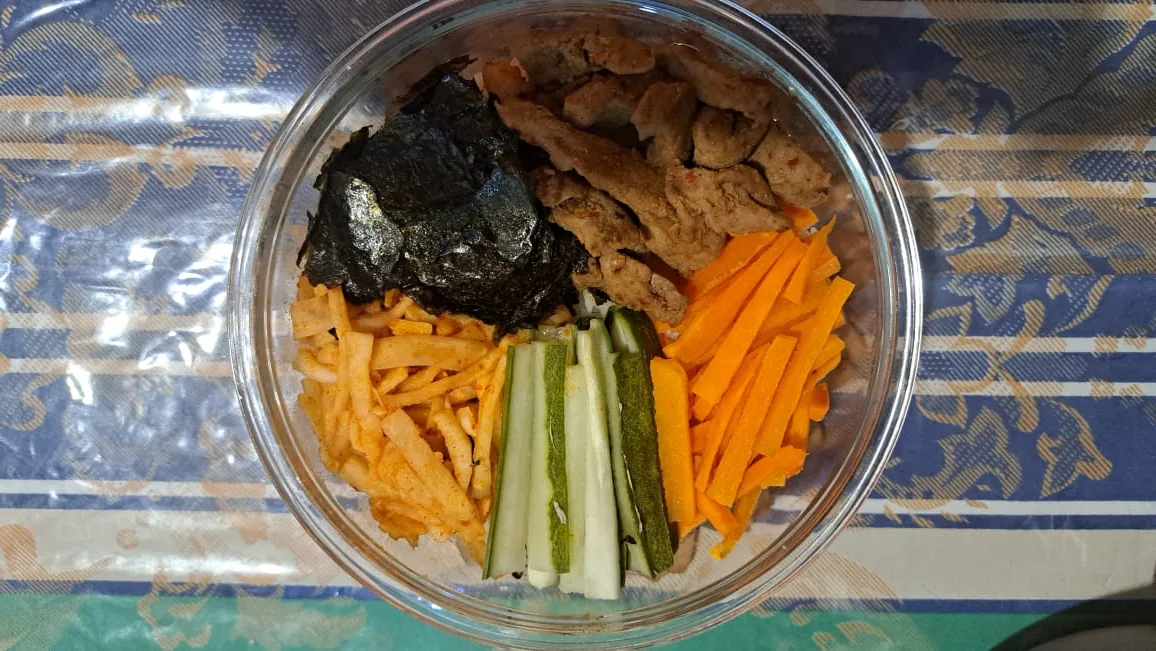
Prep Time
50min
Cook Time
10min
Total Time
1hr
Servings
2
Scale Ingredients
Original recipe makes 2 servings.
Ingredients
Beef and tenderizing solution:
- 12 oz (340g) beef sirloin, sliced across the grain into strips about 1/8 inch (3mm) thick
- 1 tsp baking soda, not baking powder
- 1/2 cup (120ml) cold water
- 1 tbsp soy sauce
- 2 tsp honey
- 2 tsp toasted sesame oil
- 1/4 tsp garlic powder, optional
- 2 tsp neutral cooking oil
Quick seasoned radish:
- 8 oz (225g) white radish, such as daikon or Korean radish, peeled and cut into thin matchsticks
- 1 tbsp gochujang, plus more to taste
- 1 small clove garlic, finely minced
- 1 tsp sugar
- 1/4 tsp salt, plus more to taste
- 1 tsp toasted sesame seeds, optional
To assemble:
- 3 cups (about 450g) cooked short-grain white rice, hot or refrigerated and ready to reheat
- 1 medium carrot, peeled and cut into thin matchsticks
- 1/2 medium cucumber, cut into thin matchsticks
- 1 small snack pack (about 0.18 oz / 5g) store-bought roasted seaweed, torn into pieces
- 1 tsp toasted sesame oil, optional, for finishing
- Extra gochujang, optional, to serve
Instructions
- Tenderize the beef for 15 minutes. Dissolve the baking soda in the cold water in a nonreactive bowl. Toss in the sliced beef so the solution coats it, cover, and refrigerate for 15 minutes. This is a tenderizing treatment, not a way to disinfect meat. Keep raw beef and its utensils away from the vegetables and cooked rice.
- Prepare the radish while the beef rests. In a separate clean bowl, toss the radish with the gochujang, minced garlic, sugar, salt, and optional sesame seeds. Cover and refrigerate for at least 20 minutes while you finish the other components. It should soften slightly but retain some crunch. Taste with a clean utensil and adjust the seasoning before serving.
- Remove the baking soda and marinate for 20 minutes. Drain the beef. Gently swish it in a bowl of fresh cold water, drain, and repeat until the solution is removed, avoiding splashes. Pat thoroughly dry with paper towels. Clean and sanitize the sink and any surfaces touched by raw meat or rinse water, and wash your hands. Toss the beef with the soy sauce, honey, sesame oil, and optional garlic powder in a clean bowl. Cover and refrigerate for 20 minutes. Discard any leftover raw marinade after cooking.
- Finish the cold toppings and warm the rice. Cut the carrot and cucumber while the beef marinates, using a clean board and knife. Keep them raw. If using refrigerated rice, sprinkle with a little water, cover loosely, and microwave in a microwave-safe bowl, stirring between short bursts, until it reaches 165°F (74°C) throughout. Keep hot until assembly. Tear the seaweed just before serving so it stays crisp.
- Pan-fry the beef. Heat a large 12-inch (30cm) skillet over medium-high heat. Add half the neutral oil, then half the beef in a single layer, leaving excess marinade in the bowl. Cook for about 3–4 minutes per batch, turning as the edges brown, until cooked through and at least 145°F (63°C) in the thickest pieces. Use a thin-tip thermometer inserted sideways where possible; color alone is not a safety check. Transfer to a clean plate, repeat with the remaining oil and beef, and let the final batch rest for at least 3 minutes. Reduce the heat if the honey starts to scorch rather than brown.
- Assemble and mix. Divide the warm rice between two bowls. Arrange the beef, raw carrot, cucumber, drained seasoned radish, and seaweed on top. Add the optional finishing sesame oil and a little extra gochujang if wanted. Mix everything together before eating, adding gochujang gradually because the radish is already seasoned.
Notes
Timing: Allow about 1 hour with cooked rice, including tenderizing, marinating, and resting. Prepare the radish and raw vegetables during the beef's waiting time. If cooking rice from dry, start it first and allow extra time as needed.
Practical tips: Slice across the grain to shorten the fibers. Baking soda raises surface pH and helps limit protein bonding; more is not better, and residue can leave an unpleasant taste.[3] Keep the treatment to the suggested 15 minutes rather than leaving it overnight. Rinsing here removes the treatment, not germs. Keep the raw-meat work separate from the ready-to-eat toppings, and refrigerate during both waits.[4]
About the radish: This is a quick gochujang-seasoned radish salad, not fermented radish kimchi. Fresh spicy radish salad is also used as a bibimbap topping; this version uses gochujang instead of the usual gochugaru seasoning.[1][2] Keep it refrigerated, not at room temperature to ferment.
Substitutions: Swap daikon and Korean radish by equal weight. Replace the honey with 2 tsp sugar if needed. Use 1 small freshly minced garlic clove instead of the optional garlic powder in the beef marinade. Gochujang varies in saltiness and heat, so taste the radish before adding more salt.
Storage and make-ahead: Keep beef, rice, vegetables, and seaweed separate. Refrigerate perishable components promptly in shallow containers within 2 hours, or within 1 hour above 90°F (32°C). Use cooked beef and rice within 3–4 days; reheat to 165°F (74°C) throughout.[4] For this unfermented radish and the cut raw vegetables, plan to use within 2 days for texture. Freeze beef and rice in separate portions for up to 1 month for best quality, thaw in the refrigerator, and reheat thoroughly. Prepare fresh cucumber, carrot, and radish rather than freezing them. Keep seaweed sealed and dry until serving.
Variations: Add a fully cooked fried egg, or serve extra gochujang on the side for more heat. For a meat-free version, replace the beef with 12 oz (340g) firm tofu, pressed and cubed. Skip the baking-soda treatment, use the same marinade, and pan-fry until hot throughout and golden on the edges; cooking time will differ.
On the side: Sesame Soy Edamame makes an easy extra vegetable side.
Sources
[1] https://www.koreanbapsang.com/bibimbap [2] https://www.koreanbapsang.com/mu-saengchae-spicy-korean-radish-salad [3] https://www.armandhammer.com/en//articles/baking-soda-meat-tenderizer [4] https://www.fsis.usda.gov/food-safety/safe-food-handling-and-preparation/food-safety-basics/steps-keep-food-safe
More like this

Smash Burgers
Ground beef pressed thin in a hot skillet for crisp edges. Add American cheese and serve on butter-toasted buns with pickles and onion.

Crispy Chicken Tenders
Chicken tenders coated in seasoned flour, egg, and a mix of panko and regular breadcrumbs. Shallow-fry and serve with dipping sauce.

Pressure Cooker Beef Stew
Beef brisket, potatoes, and carrots layered in an Instant Pot or pressure cooker with onions, bay leaves, and thyme.

One-Pot Beef Chili
Ground beef, kidney beans, and black beans simmered with tomatoes, cumin, and smoked paprika. Serve with rice or cornbread.